Table of Contents
- Industrial Floor Coating Cost Per Square Metre: What Drives the Price
- Industrial Epoxy Flooring Cost: A Like-for-Like System Comparison
- Warehouse Floor Coating Cost: How Floor Area and Traffic Load Change the Number
- Industrial Floor Resurfacing Cost: Surface Preparation and Existing Floor Condition
- Industrial Flooring Quote Checklist: What a Transparent Cost Breakdown Includes
- Lifecycle Cost, Maintenance and Installation Timeline
- Frequently Asked Questions
Last Updated: October 8, 2026
Industrial Floor Coating Cost Per Square Metre: What Drives the Price
Industrial floor coating cost per square metre is not a single number. It is the sum of several variables: the coating system, the floor size, the condition of the concrete beneath it, and the labour to prepare and install it.
That gap reflects different assumptions about preparation, materials and what “finished” means. Understanding those assumptions is the only way to compare quotes fairly.
Why Two Quotes for the Same Floor Rarely Match
Floor coating cost varies because contractors quote different scopes. One price might include full diamond grinding, crack repair and moisture testing; another a light acid etch and a single coat. The cheapest quote often assumes the floor is already sound, when it isn’t, the difference gets billed later as a variation. Choosing the lowest number without checking what preparation it covers is a common mistake.
Three factors explain most of the variation:
- Surface preparation method (grinding versus acid etch versus shot blasting)
- Coating thickness and system type (basic sealer versus heavy-duty build)
- Site access and downtime constraints (after-hours work, staged installation)
According to Safe Work Australia’s guidance on construction site safety, preparation work involving dust and machinery carries specific safety obligations, which affects labour planning and cost on any industrial job.
Industrial Epoxy Flooring Cost: A Like-for-Like System Comparison
Comparing industrial epoxy flooring cost only works when you compare systems, not just prices. A basic coating, a decorative system and a premium heavy-duty system are different products with different service lives, preparation demands and performance specifications.
Basic epoxy coatings sit at the lower end of the per-square-metre range, decorative systems in the middle, and heavy-duty epoxy or polyurethane systems at the top. Exact figures vary by city, access, floor condition and scale, so treat any single rate as a starting point.
Basic, Decorative and Premium Systems Side by Side
A basic coating suits a workshop floor with foot traffic and light trolleys.
Decorative systems add colour, flake or metallic finishes for showrooms and retail spaces where appearance matters alongside durability. Preparation is usually a full grind plus repairs, and the thicker build wears evenly.
Premium heavy-duty systems are built for forklifts, heavy machinery and chemical exposure, using thicker build, stronger resins and more rigorous preparation, often including moisture testing and edge reinforcement. The higher installed price reflects both materials and preparation.
| System | Typical Use | Preparation Level | Wear Resistance | Chemical Resistance | Relative Cost |
|---|---|---|---|---|---|
| Basic coating | Light storage, back-of-house | Light grind | Low to moderate | Low | Lowest |
| Decorative system | Showrooms, retail space | Full grind plus repairs | Moderate | Low to moderate | Mid-range |
| Premium heavy-duty | Warehouses, workshops | Full grind, repairs, moisture test | High | High | Highest |
Epoxy, Polyurethane and Polyaspartic Compared
Epoxy is the workhorse of industrial flooring. It bonds well to prepared concrete, handles moderate chemical exposure and takes heavy foot traffic.
Polyurethane is more flexible and UV-stable than epoxy, and handles thermal shock better, important in cold stores, food processing areas and loading docks.
Polyaspartic cures fast, can be walked on sooner than standard epoxy (reducing downtime) and is more UV-stable. The trade-off is a higher material cost per square metre.
Performance Specifications That Change the Price
When you compare quotes, ask for the performance specifications in writing. The numbers that matter most are:
- Slip resistance: measured by wet and dry slip resistance ratings. Higher ratings cost more but reduce workplace injury risk.
- Chemical resistance: which substances the coating resists, at what concentration and for how long.
- Abrasion resistance: how the coating performs under repeated mechanical wear.
- Load tolerance: point loads from racking legs, forklift wheels and machinery.
- Hygiene requirements: whether the surface must be seamless, cleanable and resistant to bacterial growth, common in food and healthcare settings.
A coating that meets all five specifications will cost more per square metre than one that meets two. That is not upselling; it is the difference between a floor that lasts five years and one that lasts fifteen.
Lifecycle Cost and Recoating Intervals
Upfront price is only part of the story.
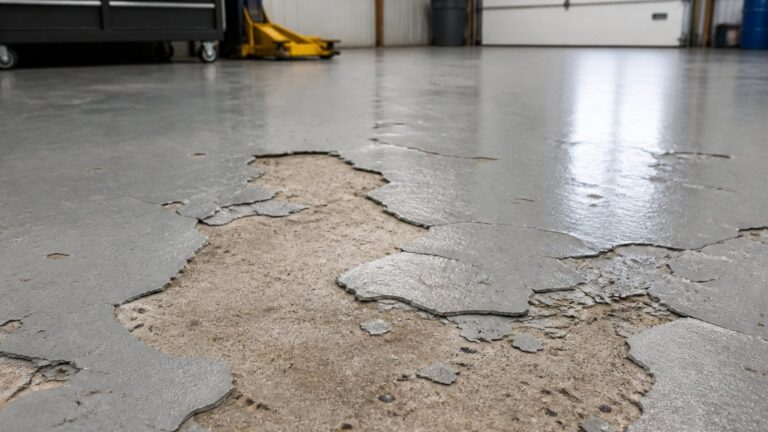
Thin coatings fail first at edges, joints and high-traffic lanes. Once water or chemicals get under the film, the failure spreads, and recoating means paying for preparation again, often the largest line item in the original quote.
Compare systems on total cost across the expected service life, not just the per-square-metre rate. That is the only like-for-like comparison of what you will actually pay.
Choosing a basic coating for a warehouse floor that runs forklifts daily is a false economy. The coating fails early, and re-coating means paying for preparation twice.
Warehouse Floor Coating Cost: How Floor Area and Traffic Load Change the Number
Warehouse floor coating cost is driven by two opposing forces. Larger floor area lowers the per-square-metre rate, because setup, mobilisation and equipment costs spread across more square metres.
A 2,000 square metre distribution centre and a 200 square metre workshop are not priced the same way. The larger job usually carries a lower rate per square metre but a much higher total project cost.
Traffic load changes the specification:
- Foot traffic and pallet jacks: standard build
- Forklifts and heavy machinery: heavy-duty build with reinforced edges
- Chemical spill zones: chemical-resistant topcoat
Per-square-metre pricing also depends on how the work is staged. A facility that can shut down completely is cheaper to coat than one that must run in sections around live operations.
Industrial Floor Resurfacing Cost: Surface Preparation and Existing Floor Condition
Industrial floor resurfacing cost rises sharply when the existing floor is poor. Preparation is the largest variable in most quotes, and the line item least understood by buyers.
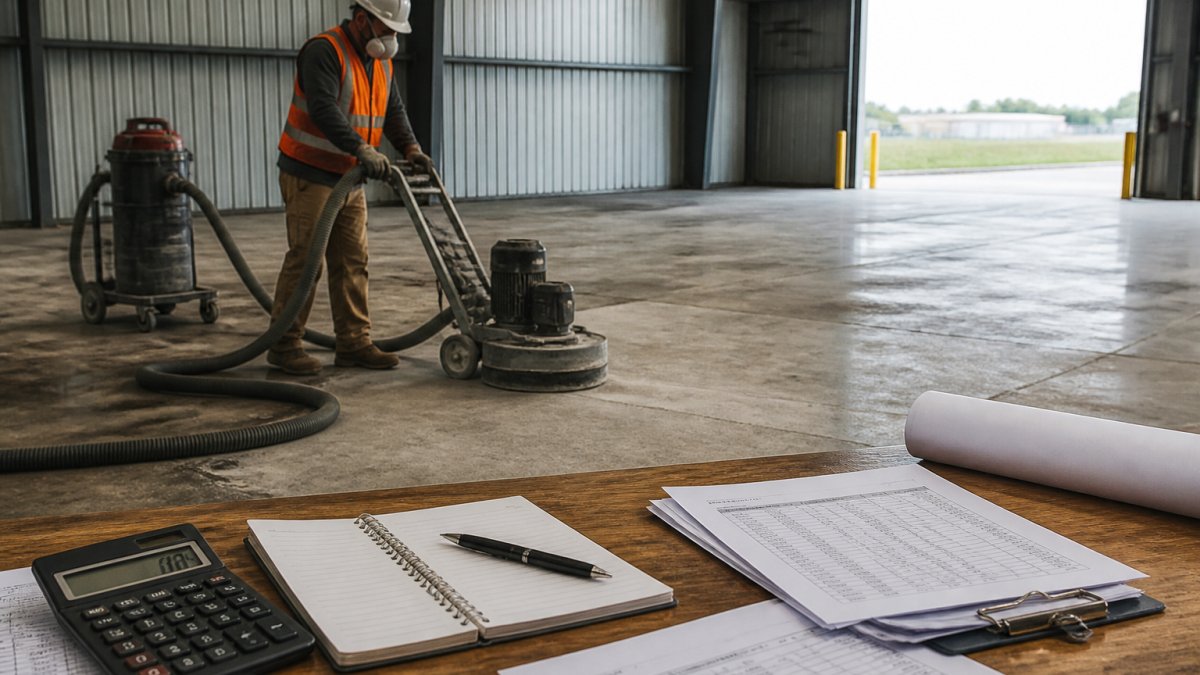
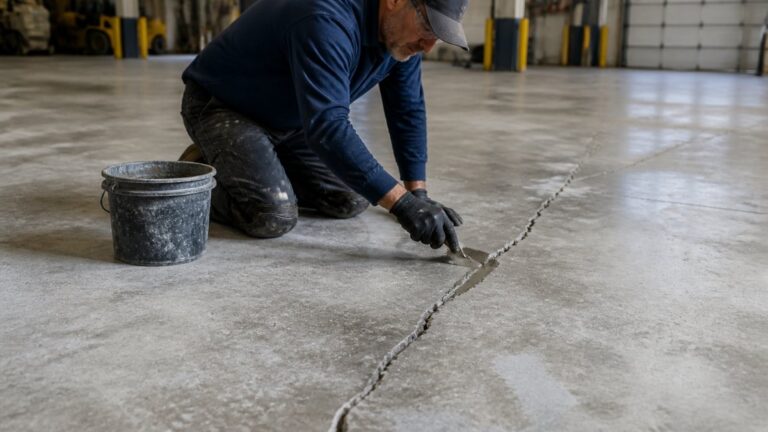
A sound concrete floor needs only a light grind to open the surface. A floor with cracks, spalling, oil contamination or a failed previous coating needs far more work before any coating goes down.
Concrete Grinding, Repairs and Moisture Testing
Concrete grinding is the standard preparation method for industrial floors: it removes contaminants, profiles the surface and gives the coating something to bond to. Skipping it is why DIY kits peel.
Moisture testing matters more than most buyers realise. If moisture rises through the slab, it pushes the coating off from underneath, no matter how good the coating is. Testing before installation prevents that failure. The CSIRO’s building and construction research covers how moisture behaviour affects concrete and applied finishes.
Ask any contractor how they test for moisture and what result would stop them from coating. If they can’t answer, they’re guessing. That guess becomes your failed floor.
Industrial Flooring Quote Checklist: What a Transparent Cost Breakdown Includes
An industrial flooring quote checklist turns an opaque number into something you can compare. A transparent quote separates material, labour and preparation costs rather than bundling everything into one figure. Most quotes will not do this by default, so ask for the breakdown in writing.
What a Per-Square-Metre Quote Should Separate
A useful quote breaks the total into at least five lines:
- Preparation: grinding, shot blasting, acid etch, crack repair, oil removal, moisture testing.
- Materials: primer, base coat, topcoat, aggregate, colour, optional finishes.
- Labour: installation hours, supervision, site setup and pack-down.
- Access and staging: after-hours work, lifts, scaffolding, temporary protection.
- Contingency: an allowance for unforeseen floor defects found once preparation begins.
If preparation and materials are bundled into one rate, you cannot tell whether the contractor has allowed enough for the actual condition of your floor. That is how variations appear later.
Why Preparation Is the Largest Variable
Preparation is usually the largest single line item in an industrial floor coating quote. A sound floor needs only a light grind; one with cracks, spalling, oil contamination or a failed previous coating needs far more work. Ask the contractor to state the preparation method, equipment and defects allowed for. If they have not inspected the floor, their allowance is a guess, and that guess becomes your variation.
Materials and Optional Finishes
Materials are the second-largest line. The quote should name the coating system, number of coats and dry film thickness. Optional finishes such as anti-slip aggregate, line marking, coving or UV-stable topcoats should be listed separately so you can see what each adds to the per-square-metre rate. Decorative finishes add a modest amount; anti-slip and chemical-resistant topcoats add more. Line marking and coving are usually priced per linear metre.
Labour, Access and Downtime
Labour is driven by site conditions as much as floor area. A facility that can shut down completely is cheaper to coat than one running in sections around live operations; after-hours work, staged installation and temporary protection all add labour hours. Ask for the installation timeline, preparation, coating, curing, and the return-to-service window. Downtime belongs in your comparison even if it does not appear on the quote.
A Checklist You Can Use
Use this checklist when reviewing any quote:
- Floor area measured in square metres, stated clearly
- Coating system named, with thickness specified
- Preparation method stated (grinding, shot blasting, acid etch)
- Repairs itemised separately from coating
- Moisture testing included or explicitly excluded
- Labour costs broken out from material costs
- Optional finishes priced separately
- Site conditions and access noted (after-hours, staged work)
- Installation timeline with start and finish dates
- Return-to-service window stated
- Warranty terms in writing
- Exclusions listed (what is NOT included)
If a quote is missing the preparation method and the coating thickness, you cannot compare it to any other quote. Those two lines decide the floor’s service life.
A cost estimate built this way also protects you later. When the scope is written down, variations are easier to challenge.
Lifecycle Cost, Maintenance and Installation Timeline
Lifecycle cost is where cheap coatings lose. A coating that costs less upfront but fails in three years costs more than a premium system that lasts fifteen, once you add re-coating, downtime and disruption.
The cheapest quote is rarely the cheapest floor. Compare quotes on preparation, thickness and warranty, then compare the total cost across the coating’s full service life.
Getting an industrial floor coating right comes down to one thing: choosing the system that matches your actual traffic, chemicals and floor condition, then preparing the concrete properly so it stays down. Apex Custom Coatings brings over 15 years of experience, a highly trained and accredited team, and premium materials to every job, backed by reliable warranties and strict safety compliance.
Frequently Asked Questions
How much does industrial floor coating cost per square metre?
There is no single figure that applies to every site. The floor coating cost per square metre depends on the coating system, the floor area, the condition of the concrete, and how much surface preparation is needed. A basic roll-on coating on a sound slab sits at the lower end, while heavy-duty systems built for forklifts, chemical spillage and washdown sit higher. Because pricing depends on your specific site conditions, request a written quote based on a site inspection rather than relying on a generic rate.
What factors affect the cost of industrial floor coatings?
The biggest cost factors are floor area, existing floor condition, and the coating system selected. Surface preparation such as concrete grinding, crack repair and moisture testing adds labour and material costs. Site conditions matter too: access restrictions, drying times between coats, and whether the facility can be shut down all influence the installed price. Coating thickness, wear resistance and chemical resistance requirements also push the number up. A larger floor area usually lowers the per-square-metre rate because setup costs are spread further.
What should an industrial flooring quote checklist include?
A complete industrial flooring quote checklist should list the coating system and number of coats, the surface preparation method, coating thickness, and whether floor repairs are included. It should also state the warranty terms, the expected installation timeline, and any site access or shutdown requirements. Ask whether the quote covers moisture testing and whether the price is fixed or subject to variation after grinding exposes the slab. If any of these items are missing, ask for them in writing before you compare quotes.
How long should an industrial floor coating last?
Service life depends on the coating system, the traffic it carries and how well it is maintained. A basic coating in a light-use area may need recoating sooner than a heavy-duty system in a warehouse running forklifts daily. Chemical resistance and wear resistance specifications are the best guide to expected durability. Regular cleaning and prompt repair of chips or scratches extend service life considerably. Ask your installer what maintenance schedule they recommend for your specific coating system.