Table of Contents
- Why DIY Epoxy Floors Peel: The Main Culprits
- How to Diagnose Peeling Epoxy: Step-by-Step Testing
- How to Fix Peeling Epoxy Floor: Repair Workflow
- Frequently Asked Questions
Last Updated: October 12, 2026
Why DIY Epoxy Floors Peel: The Main Culprits
DIY epoxy floors peel because of poor surface preparation, trapped moisture, or incorrect mixing.
If concrete isn’t clean, dry, and properly profiled, epoxy won’t bond. Dust, oil, grease, laitance, and moisture are the primary culprits, even small amounts cause adhesion failure.
Moisture is the silent killer: hydrostatic pressure pushes water vapour up through untested concrete, blistering and peeling the epoxy. Humidity and temperature swings also compromise the cure.
Incorrect mixing ratios are another common mistake. Too much hardener or too little resin throws off the chemical reaction, so the coating never fully hardens or bonds.
How to Diagnose Peeling Epoxy: Step-by-Step Testing
Diagnosing peeling epoxy requires systematic testing. Start by inspecting where the peeling occurs and how it started.
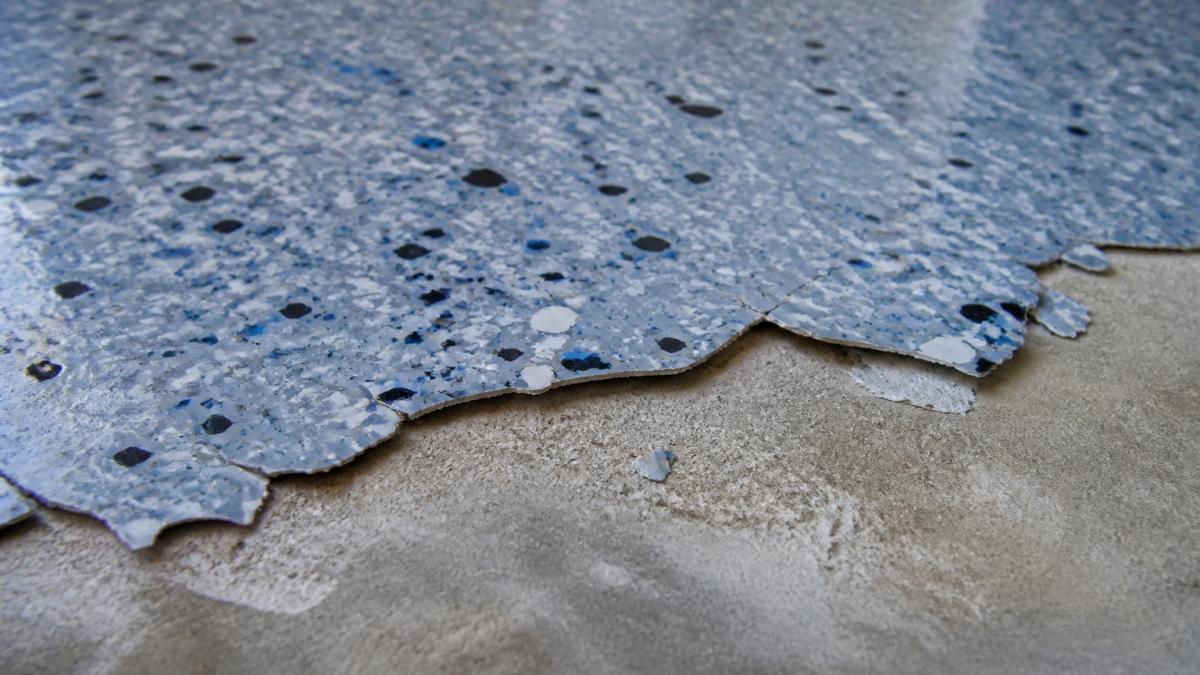
Test for moisture first: Use a calcium chloride or relative humidity meter; acceptable levels are typically below 3-4%. If moisture is high, concrete sealing or letting the substrate cure longer before recoating can help prevent future failure.
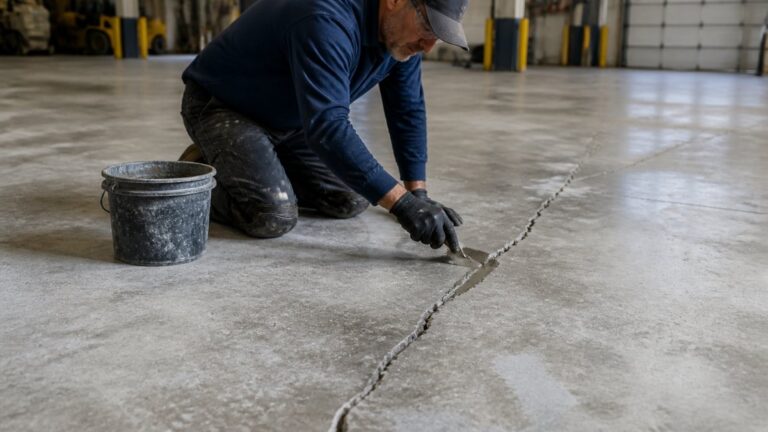
Inspect the bond: Scrape a small area with a putty knife. Large sheets mean adhesion failed; cracks and flakes mean the mixing ratio was wrong.
Check the surface profile: The concrete should feel rough, like medium-grit sandpaper. Smooth or slippery concrete won’t hold epoxy.
Look for contamination: Wipe a white cloth across the concrete. Dirt, dust, or oily residue means cleaning was incomplete; oil stains require degreasing first.
How to Fix Peeling Epoxy Floor: Repair Workflow
Fixing peeling epoxy floors means removing the failed coating completely and reapplying it correctly.
Step 1: Strip the failed coating, Grind the entire surface with a coarse diamond attachment in overlapping passes until the concrete is bare. Professional coating removal services can handle this efficiently if the area is large or the adhesion failure is severe.
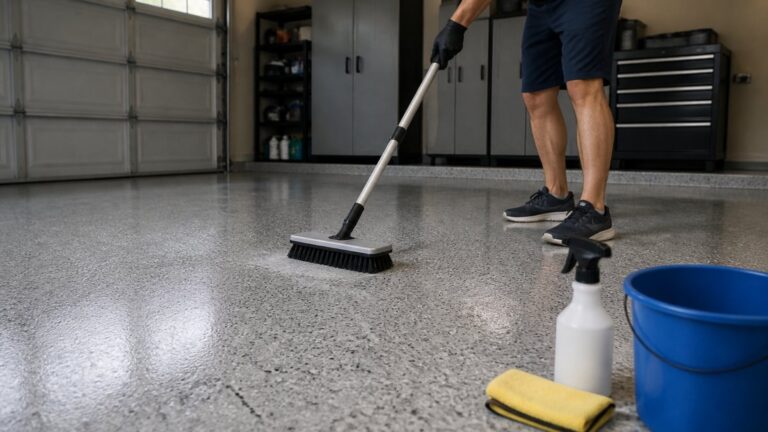
Step 2: Clean and dry the substrate, Vacuum all dust; degrease if oil or grease is present. Dry at least 48 hours and verify moisture levels.
Step 3: Test adhesion, Apply a small test patch in an inconspicuous area, let it cure fully, and check that it bonds firmly.
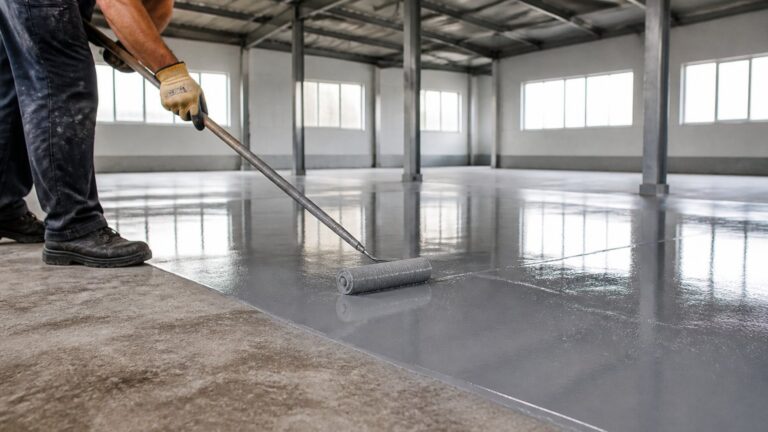
Step 4: Apply primer and topcoat correctly, Mix small batches to exact ratios, prime porous or newly ground concrete, and apply topcoat at 2-4mm per coat at proper temperature and humidity.
Step 5: Monitor curing
- Keep foot traffic and water off the floor until fully cured
- Hold temperature between 15-25°C during application and curing
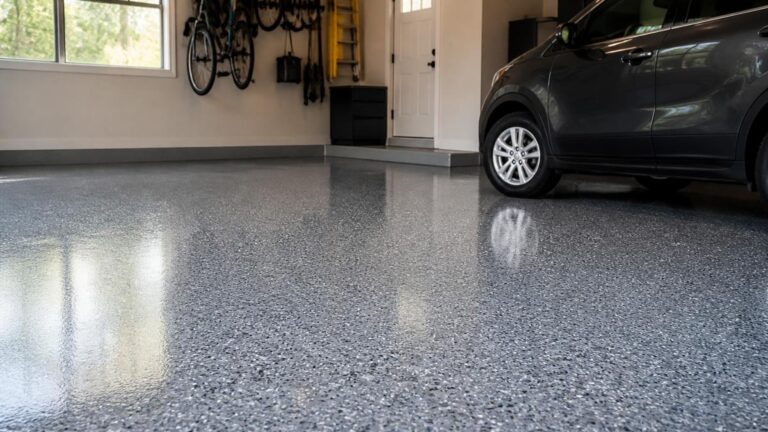
Professional epoxy coatings remove the guesswork. Apex Custom Coatings handles substrate testing, grinding, moisture verification, and application to strict standards, delivering a floor that lasts years, not months. If your DIY attempt has failed, we can strip and recoat it correctly.
Frequently Asked Questions
Why do DIY epoxy floors peel when professional installations don’t?
DIY epoxy floors peel most often due to inadequate surface preparation, moisture in the concrete substrate, or incorrect mixing ratios. Professional installers test moisture levels, grind concrete to the correct profile, measure epoxy components precisely, and apply coatings at proper thickness. DIY kits often skip these critical steps. Moisture is the leading cause: if your concrete holds water, epoxy cannot bond properly and will blister or peel within months.
How can you tell if moisture is causing epoxy to peel?
Moisture-related peeling typically appears as blistering or bubbling under the coating, often starting near walls or low spots where water accumulates. To test, tape a plastic sheet to the concrete for 24 hours; if condensation forms underneath, moisture is present. Concrete should have less than 3% moisture content before epoxy application. If moisture is the culprit, you must address the source (seal cracks, improve drainage) before recoating, or the new epoxy will fail the same way.
Can you apply new epoxy over peeling epoxy?
No. Applying epoxy over peeling coating will fail because the new layer cannot bond to unstable substrate. You must remove all failed epoxy first using grinding or chemical stripping, then test the concrete, address moisture or contamination, and apply a primer before the new topcoat. Skipping removal is the fastest way to repeat the peeling problem.
Peeling epoxy floors are frustrating, but they’re fixable. The key is understanding why it failed and addressing the root cause, not just covering it up. If you’d rather avoid the risk and the labour, Apex Custom Coatings delivers durable, professionally applied epoxy coatings with comprehensive warranties and proven longevity. Contact us today to discuss your garage floor, workshop, or commercial space.